


HALIFAX, NOVA SCOTIA | CANADA B3H 4R2 | +1 (902) 494-3632

Kate Sherren
Assistant Professor

Phone: 902-494-1359
Email:  kate.sherren(at)dal.ca

Cross-appointed: Dalhousie College of Sustainability
Visiting Fellow: Fenner School of Environment and Society,
ANU

NOW RECRUITING STUDENTS FOR 2013:  Reimagining Canada's Energy Landscapes

I am the newest professor at SRES. I moved to Halifax with my husband and daughter in mid-2010 from the Australian capital of Canberra. The move represents the closing of a circle. I lived in Halifax briefly in the early 90’s, when I first left school, and grew up in Newfoundland and New Brunswick. The leaves are just starting to obscure my view of the Northwest Arm from my home office as I write this on a blustery mid-May morning.

In Australia, I held a post-doctoral fellowship working with Australian sheep and cattle graziers on the problem of isolated and scattered tree collapse on their farms. The YouTube video below summarises the findings from that interdisciplinary work. Before that I worked on sustainability research and teaching in universities, particularly interdisciplinary collaboration (2004-2007), urban water issues in New Orleans (2001-2002), sustainable industrial-scale forestry planning in northern British Columbia (1996-1999), and aspen-dominated forest fire threat modelling in northern Alberta (1995). These diverse activities make sense when you consider the discipline of my first degree: Geography (BES Waterloo).


I have a passion for applied, interdisciplinary team research, and for integrating multiple methods. In my previous work I have used and combined research methods as disparate as photo-elicitation, qualitative interviews, large-scale mail-out surveys, stakeholder workshops, social network analysis, spatial analysis and virtual-reality landscape visualisation. Visual and in situ landscape-based methods are a particular interest.

There are four key themes to my research:
1) multifunctional landscapes; 2) cultural ecosystem services; 3) community resilience and adaptation; and 4) the organizational and intellectual challenges of cross-cutting topics like sustainability. My publications and recent grants and teaching activities are listed elsewhere.

     1) Multifunctional landscapes
Biodiversity is the engine of ecosystem goods and services, but I find myself less interested in the challenge (albeit important) of protecting areas for biodiversity. I find more compelling the challenge of finding ways to manage human-altered landscapes like farms and cities for multiple benefits. For instance, in Australia we sought to improve tree cover and thus biodiversity on large, grazing properties. I now engage in similar work in Nova Scotia except on farm wetlands, and am beginning to investigate mixed energy landscapes, too.

     2) Cultural ecosystem services
Intangible benefits from nature such as religious, recreational, reflective, and aesthetic experiences that contribute to ‘sense of place’ are significant drivers of human decision-making. Because they are difficult to measure they are often neglected by policy-makers, to the detriment of policy implementation success. Much of my recent work has sought to elicit ‘landscape values’ and understand how they connect to farmer decision-making, for instance. A new initiative seeks to understand how such values influence how the public feels about energy options.

     3) Community resilience and adaptation
Heterogeneity leads to resilience in natural systems, and I believe the same holds for human systems. Farms with habitat like trees and wetlands integrated throughout their operations, rather than just on their periphery, will have improved ecosystem goods and services. A diversity of farm types, sizes and distributions will serve us better than few industrial operations. Maintaining viable rural areas will improve conditions in cities. A range of different energy options, distributed around the landscape, has benefits over few, large installations. Inspiring human activity in support of such heterogeneity, for general resilience as well as adaptation to climate change, is a key thrust of my work.

     4) Sustainability
The interdisciplinary nature of sustainability, and the subsequent challenges of its achievement, remains an interest since my doctoral work on university research and teaching on sustainability. How can we best organize ourselves towards this end, and what barriers are tractable or intractable, or even – paradoxically – on balance beneficial? Are network models better than dedicated departments? Sustainability curriculum is an additional strand, and beyond that in universities; I have played a key part of new schools curricula in Australia (scattered tree benefits and retention) and Nova Scotia (climate change adaptation).

Current students

I am currently the primary supervisor for four MES students: 

  • Ais Baskaran is investigating agricultural land use, water management issues and regulating ecosystem services.
  • Kate Goodale is looking at how farmers perceive wildlife on their farms, and the impact of a voluntary stewardship program to improve habitat for wildlife on farms.
  • Simon Greenland-Smith is exploring farmer perceptions of man-made versus natural wetlands.
  • Ellen Whitman is grappling with the tug of war between ecosystem services and fire risk embodied by trees in the wildland-urban interface, now and under climate change (co-supervised with Eric Rapaport, Planning)

I am serving on the committees of another seven Masters students and three PhD students:

  • Grace Asiedu is eliciting the many values people hold about dykes and dykelands.
    Jeff Campbell is exploring a new program (ALUS) by which farmers are paid for the ecosystem goods and services they provide.
  • Stephen Cushing is eliciting values about campus trees from a diverse group, and figuring out how to inject such information into development planning processes.
  • Angela Hersey is exploring farm succession planning, and programs that can help.
  • Andy Kekacs is eliciting landscape values from the private woodlot owners who own most of Nova Scotia, to understand why they have stopped selling their fibre to mills.
  • Lauri Lidstone is analyzing the sustainability ethos of universities by comparing policies with actions declared through certification programs.
  • Paul Sylvestre is trying to understand how faculty members across the university conceive of sustainability and what that means for its integration into the institution.
  • Andra Milcu and Frieda Mikulcak are both PhD students working on my colleague Joern Fischer’s project on sustainable development in Romania. I am helping Andra to explore villager landscape values, particularly cultural ecosystem services, using image-based Q-method. Frieda I am advising on the use of social network analysis to assess the holism of existing governance and institutional arrangements for sustainable development
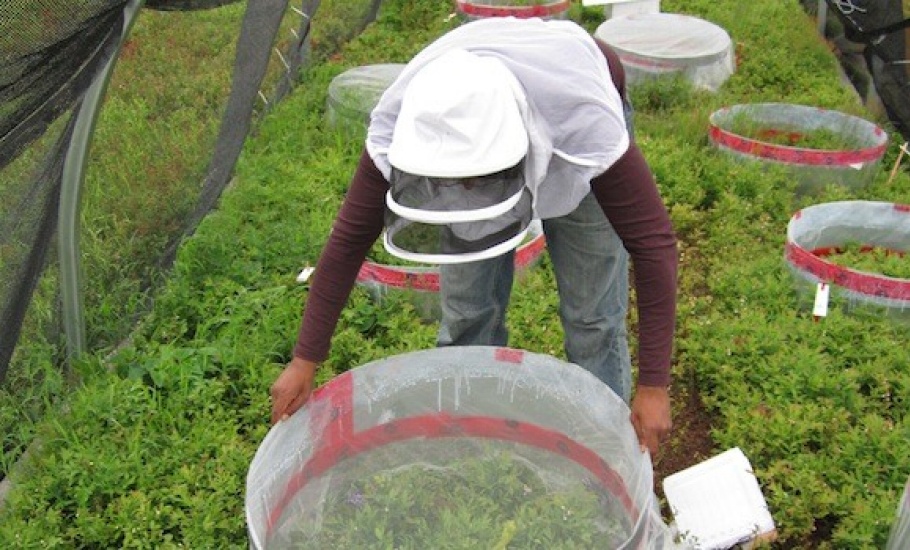
  • Andony Melathopoulos is testing the scientific basis of economic valuations of pollination services, as well as challenging orthodoxies around the contribution of such valuations to societal transformations for sustainability.

Please email me or come talk to me if you think we have interests in common.

Kate Sherren, May 10, 2012